


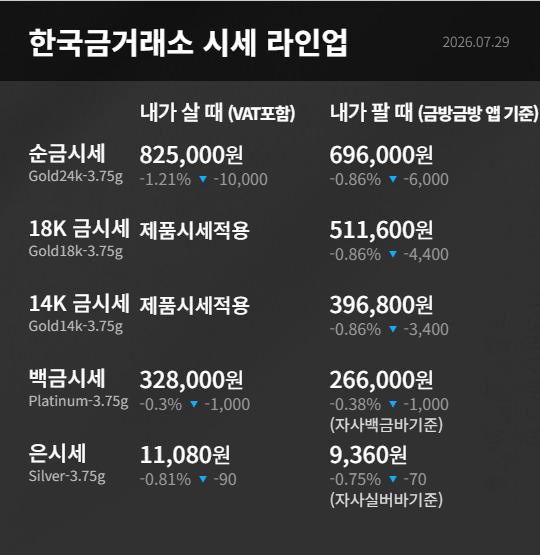
[CBC뉴스] 2026년 7월 29일 기준 한국금거래소 시세에 따르면 순금(24K·3.75g) 시세는 살 때 82만5,000원, 팔 때 69만6,000원으로 집계됐다. 살 때 가격은 전 거래일 대비 1.21% 하락하며 1만원 내렸고, 팔 때 가격도 0.86% 하락해 6,000원 떨어졌다.
18K 금 팔 때 가격은 51만1,600원으로 나타났다. 전 거래일 대비 0.86% 하락하며 4,400원 내렸다.
14K 금 팔 때 가격은 39만6,800원으로 집계됐다. 전 거래일 대비 0.86% 하락해 3,400원 떨어졌다.
백금(Platinum·3.75g)은 살 때 32만8,000원, 팔 때 26만6,000원을 기록했다. 살 때 가격은 전 거래일 대비 0.3% 하락하며 1,000원 내렸고, 팔 때 가격도 0.38% 하락해 1,000원 떨어졌다.
은(Silver·3.75g)은 살 때 1만1,080원, 팔 때 9,360원으로 집계됐다. 살 때 가격은 전일 대비 0.81% 하락하며 90원 내렸고, 팔 때 가격도 0.75% 하락해 70원 떨어졌다.
한편 국제 금값이 미국 연방공개시장위원회(FOMC)의 기준금리 결정을 앞두고 하락했다. 뉴욕증시에서는 다우존스 산업평균지수가 500포인트 넘게 상승했지만 반도체주 약세로 나스닥지수가 밀리는 혼조세가 나타난 가운데, 금 시장에서는 안전자산 수요보다 달러 강세와 미국의 고금리 장기화 가능성이 더 크게 반영됐다.
29일 현재 국제 금 현물 가격은 온스당 4,015.60달러다. 전일보다 -23.10(0.57%) 내린 것이다.
금값이 온스당 4,000달러 선을 유지하고 있지만 FOMC를 앞둔 경계심이 확대되면서 매수세가 적극적으로 유입되지 못했다.
같은 날 뉴욕증시는 업종별로 뚜렷하게 엇갈렸다. 다우존스 지수는 537.24포인트, 1.03% 오른 52,747.32에 거래를 마쳤다. 스탠더드앤드푸어스(S&P)500지수도 0.2% 오른 7,428.78을 기록했지만 나스닥 종합지수는 0.2% 하락한 24,876.91에 마감했다. 코카콜라를 비롯한 대형 우량주의 실적이 다우 지수를 끌어올린 반면, 인공지능과 반도체 관련 종목의 조정이 나스닥지수에 부담을 줬다.
주식시장의 위험선호가 완전히 꺾인 것은 아니었지만 금값은 약세를 피하지 못했다. 일반적으로 주식시장의 변동성이 커지면 안전자산인 금으로 자금이 이동할 가능성이 커진다. 그러나 이번 시장에서는 금과 함께 대표적인 안전자산으로 분류되는 미국 달러로 수요가 집중됐다. 달러 가치가 오르면 달러로 표시되는 금 가격이 미국 이외 지역 투자자들에게 상대적으로 비싸지기 때문에 금 수요를 제약할 수 있다.
주요 6개 통화 대비 달러 가치를 보여주는 달러지수는 한때 최근 한 달 사이 높은 수준인 101선 중반까지 상승했다. FOMC가 이번 회의에서 금리를 동결하더라도 물가 불안을 이유로 매파적인 신호를 내놓을 수 있다는 관측이 달러를 지지했다. 달러지수는 101.80 부근의 최근 고점에 가까운 수준에서 움직였으며, 금 시장에는 직접적인 하락 압력으로 작용했다.
금은 이자나 배당을 지급하지 않는 자산이다. 기준금리와 국채금리가 높게 유지될수록 현금과 채권을 보유해 얻을 수 있는 이자수익이 커지고, 상대적으로 금을 보유하는 데 따른 기회비용도 높아진다. 이 때문에 금 시장은 실제 금리 결정뿐 아니라 연방준비제도 인사들의 발언과 향후 금리 전망 변화에 민감하게 반응한다.
연준은 28일부터 29일까지 이틀 일정으로 7월 FOMC 회의를 진행하고 있다. 직전 회의에서 연준은 연방기금금리 목표 범위를 연 3.50~3.75%로 유지했다. 연준이 공개한 6월 회의 의사록에도 다음 FOMC 회의가 7월 28일과 29일 열릴 예정이라고 명시돼 있다.
시장은 이번 회의에서도 기준금리가 동결될 가능성을 상대적으로 높게 반영하고 있다. 다만 단순한 동결 여부보다 케빈 워시 연준 의장이 기자회견에서 물가와 향후 금리 경로에 대해 어떤 표현을 사용하는지가 금값의 단기 방향을 결정할 핵심 변수가 될 전망이다.
금리 동결이 발표되더라도 추가 인상 가능성을 열어두는 발언이 나온다면 달러와 단기 국채금리가 다시 상승하면서 금 시세에 부담을 줄 수 있다. 반대로 에너지 가격 하락이나 경기 둔화를 강조하며 추가 긴축에 신중한 태도를 보일 경우 달러 강세가 완화되고 금값의 낙폭이 줄어들 가능성이 있다.
금리선물시장에서는 이번 회의의 금리 동결 가능성이 약 70% 수준으로 반영된 반면, 9월 회의에서 금리가 인상될 가능성도 상당 부분 가격에 반영돼 있다. 금 시장이 이번 동결 자체보다 9월 이후의 정책 경로에 더 민감하게 움직이는 배경이다.
미국 국채금리는 이날 국제유가 하락과 채권 매수세 유입으로 낮아졌다. 미국 10년물 국채금리는 약 4.604%, 통화정책 전망에 민감한 2년물 금리는 약 4.275%까지 내려왔다. 일반적으로 국채금리 하락은 금값에 우호적인 재료이지만, 이날은 달러 강세와 FOMC 불확실성이 더 크게 반영되면서 금리 하락 효과가 제한됐다.
이처럼 달러와 국채금리가 서로 다른 방향으로 움직였다는 점도 금 시장의 관망세를 키웠다. 국채금리만 보면 금의 보유 부담이 일부 줄었지만, 달러가 한 달 만의 강세권에 머물면서 미국 이외 지역의 실물 금과 투자용 금 수요에는 부담이 가해졌다.
최근 국제유가가 하락한 점도 금값에 복합적으로 작용하고 있다. 유가가 내려가면 에너지발 물가 상승 우려가 완화돼 연준의 금리 인상 압력이 줄어들 수 있다. 이는 중장기적으로 금에 긍정적인 요인이 될 수 있다.
금값은 올해 초 고점을 형성한 뒤 큰 폭의 가격 조정을 겪었다. 중동 지역의 군사적 충돌과 에너지 가격 상승이 물가 불안을 자극했고, 시장이 연준의 금리 인하보다 금리 동결 또는 추가 인상 가능성을 반영하기 시작하면서 금의 투자 매력이 낮아졌다. 금값이 전통적인 인플레이션 방어 자산으로 분류되더라도 실제 시장에서는 명목금리와 실질금리, 달러 가치가 동시에 가격을 좌우한다.
이번 주 예정된 미국 빅테크 기업들의 실적도 금 시세와 무관하지 않다. 마이크로소프트와 메타플랫폼스를 시작으로 애플과 아마존 등 주요 기술기업의 실적 발표가 이어진다. 기업들이 AI 데이터센터와 반도체, 클라우드 인프라에 대한 설비투자를 확대할 경우 기술주 투자심리가 회복되면서 안전자산 수요가 줄어들 수 있다.
반대로 AI 투자비용 증가가 수익성 악화로 이어지거나 향후 전망이 시장 기대에 미치지 못할 경우 기술주 변동성이 확대될 수 있다. 이때 위험회피 자금이 달러와 국채, 금 가운데 어느 자산으로 이동하는지가 중요하다. 최근 시장에서는 위험회피 상황에서도 금보다 달러가 강한 모습을 보이고 있어 단순히 나스닥지수가 하락했다는 이유만으로 금값 상승을 예상하기는 어렵다.
반도체 업종의 조정도 금 시장이 주목하는 변수다. AMD와 마이크론, 테라다인 등 반도체 관련 종목은 아시아 증시의 기술주 약세와 높은 밸류에이션 부담, 차익 실현 매물의 영향을 받았다. AI 관련주 조정이 일시적인 순환매에 그칠지, 성장주 전반의 위험 회피로 확대될지에 따라 금에 유입되는 자금의 규모도 달라질 수 있다.
금 투자자금의 흐름을 보여주는 금 상장지수펀드의 움직임은 최근 다소 약해졌다. 세계금협회에 따르면 지난 6월 글로벌 실물 금 기반 ETF에서는 89억달러 규모의 자금이 빠져나갔다. 보유량은 한 달 동안 74톤 감소한 4,047톤으로 집계됐다. 지역별로도 북미를 중심으로 모든 지역에서 순유출이 나타났다.
금 ETF에서 자금이 이탈했다는 것은 기관과 금융시장 투자자들이 단기적으로 금에 대한 비중을 줄였다는 의미로 해석할 수 있다. 금값이 고점에서 조정을 받은 상황에서도 적극적인 저가 매수보다 현금과 채권, 주식 등 다른 자산으로 자금이 이동한 것이다.
다만 올해 상반기 전체로 보면 글로벌 금 ETF에는 약 80억달러의 자금이 순유입됐다. 6월 한 달의 대규모 유출만으로 장기적인 금 투자 수요가 완전히 사라졌다고 판단하기는 어렵다. 상반기 동안 아시아 지역 금 ETF에는 약 120억달러가 유입돼 지역별로도 차별화된 흐름이 나타났다.
중앙은행의 금 매입도 국제 금값의 장기적인 하단을 지지하는 요인으로 거론된다. 세계금협회 자료에 따르면 각국 중앙은행과 공공기관의 올해 1분기 금 수요는 약 243.7톤으로 전년 동기보다 3%, 직전 분기보다 17% 증가했다. 폴란드와 우즈베키스탄 등이 주요 금 매입국으로 나타났다.
세계금협회가 진행한 중앙은행 설문조사에서는 응답자의 89%가 향후 12개월 동안 전 세계 중앙은행의 금 보유량이 증가할 것으로 예상했다. 자체적으로 금 보유량을 늘릴 계획이라고 응답한 중앙은행 비율도 역대 가장 높은 45%를 기록했다.
International gold prices declined ahead of the U.S. Federal Open Market Committee (FOMC) interest rate decision, as a stronger U.S. dollar and expectations of prolonged higher interest rates outweighed traditional safe-haven demand. Although the Dow Jones Industrial Average surged more than 500 points, weakness in semiconductor stocks dragged the Nasdaq lower, leaving Wall Street with a mixed performance.
As of July 29, spot gold was trading at $4,015.60 per ounce, down $23.10, or 0.57%, from the previous session.
Despite holding above the psychologically important $4,000-per-ounce level, gold failed to attract strong buying interest as investors adopted a cautious stance ahead of the Federal Reserve's policy announcement.
U.S. equities ended the session with divergent performances across sectors. The Dow Jones Industrial Average rose 537.24 points (1.03%) to 52,747.32, supported by strong earnings from blue-chip companies including Coca-Cola. The S&P 500 gained 0.2% to 7,428.78, while the Nasdaq Composite fell 0.2% to 24,876.91, weighed down by weakness in artificial intelligence and semiconductor-related stocks.
Although investor appetite for risk did not disappear entirely, gold still came under pressure. Normally, heightened volatility in equity markets increases demand for safe-haven assets such as gold. This time, however, investors favored the U.S. dollar instead. A stronger dollar makes gold, which is priced in U.S. currency, more expensive for overseas buyers, reducing global demand.
The U.S. Dollar Index, which measures the greenback against six major currencies, climbed to the mid-101 range—its highest level in about a month. Expectations that the Federal Reserve could maintain a hawkish tone even if it leaves interest rates unchanged helped support the dollar. Trading near 101.80, close to recent monthly highs, the stronger dollar became a direct headwind for gold prices.
Unlike bonds or dividend-paying stocks, gold generates no interest income. When policy rates and Treasury yields remain elevated, investors can earn higher returns from cash and fixed-income assets, increasing the opportunity cost of holding gold. As a result, the precious metal is highly sensitive not only to the Fed's policy decision but also to officials' comments and changes in the outlook for future interest rates.
The Federal Reserve is holding its July FOMC meeting over July 28–29. At its previous meeting, the central bank kept the federal funds target range at 3.50% to 3.75%, and the minutes released in June confirmed the July meeting schedule.
Financial markets currently assign a relatively high probability to another rate pause. However, investors are expected to focus less on the decision itself and more on how Fed Chair Kevin Warsh characterizes inflation and the future path of monetary policy during his post-meeting press conference.
Even if the Fed leaves rates unchanged, any indication that further tightening remains possible could lift both the U.S. dollar and short-term Treasury yields, adding pressure on gold. Conversely, if policymakers emphasize easing energy prices or slowing economic growth while signaling greater caution toward additional tightening, dollar strength could moderate and help limit gold's decline.
Interest-rate futures currently imply roughly a 70% probability that the Fed will leave rates unchanged at this meeting, while markets continue to price in a meaningful chance of a rate hike at the September meeting. This explains why gold investors remain more focused on the policy outlook beyond July than on the current decision itself.
U.S. Treasury yields declined during the session as lower crude oil prices and renewed demand for government bonds supported the fixed-income market. The yield on the benchmark 10-year Treasury fell to around 4.604%, while the 2-year Treasury, which is more sensitive to monetary policy expectations, eased to approximately 4.275%. Under normal circumstances, lower Treasury yields would support gold prices. However, the positive effect was largely offset by dollar strength and uncertainty surrounding the FOMC meeting.
The divergence between Treasury yields and the U.S. dollar also contributed to a wait-and-see attitude in the gold market. Lower bond yields reduced the opportunity cost of holding gold, but the dollar's strongest level in a month continued to weigh on both physical and investment demand outside the United States.
Recent declines in crude oil prices have also had mixed implications for gold. Falling energy prices reduce inflationary pressures, potentially easing the Federal Reserve's need for further rate hikes. Over the longer term, that could become supportive for precious metals.
Gold has undergone a significant correction since reaching record highs earlier this year. Military tensions in the Middle East and rising energy prices initially fueled inflation concerns, but as markets increasingly shifted their focus from potential rate cuts to prolonged policy tightening, gold's investment appeal weakened. Although gold remains widely viewed as a hedge against inflation, its market performance is ultimately driven by a combination of nominal interest rates, real yields, and the strength of the U.S. dollar.
This week's earnings reports from major U.S. technology companies may also influence gold prices. Microsoft and Meta Platforms are scheduled to report first, followed by Apple and Amazon. Strong corporate spending on AI data centers, semiconductors, and cloud infrastructure could improve investor sentiment toward technology stocks, reducing demand for traditional safe-haven assets.
On the other hand, if rising AI investment costs hurt profitability or corporate guidance disappoints expectations, volatility in technology stocks could increase. In that scenario, market participants will closely watch whether defensive capital flows into the U.S. dollar, Treasury bonds, or gold. Recent trading patterns suggest that the dollar has remained the preferred refuge, making it difficult to assume that a weaker Nasdaq alone will automatically boost gold prices.
The semiconductor sector remains another key variable for the precious metals market. Shares of companies including AMD, Micron, and Teradyne came under pressure amid weakness in Asian technology stocks, elevated valuations, and profit-taking. Whether the AI-related pullback proves to be a temporary sector rotation or evolves into a broader risk-off move across growth stocks may determine how much capital ultimately flows into gold.
Investment demand through gold-backed exchange-traded funds (ETFs) has also softened recently. According to the World Gold Council, global physically backed gold ETFs recorded $8.9 billion in net outflows during June, while total holdings declined by 74 metric tons to 4,047 tons. Net outflows were recorded across all regions, led by North America.
The withdrawal of funds from gold ETFs suggests that institutional and financial investors have reduced their short-term exposure to the precious metal. Even after gold corrected sharply from its highs, many investors preferred allocating capital to cash, bonds, and equities rather than aggressively buying the dip.
Nevertheless, the broader trend remains more constructive. During the first half of the year, global gold ETFs still attracted approximately $8 billion in net inflows. Asia alone accounted for roughly $12 billion in ETF inflows, indicating that regional demand patterns remain uneven despite June's sharp outflows.
Central bank purchases continue to provide long-term support for the gold market. According to the World Gold Council, central banks and public institutions purchased approximately 243.7 metric tons of gold during the first quarter of this year, up 3% year-over-year and 17% from the previous quarter. Poland and Uzbekistan ranked among the largest buyers.
In the World Gold Council's latest central bank survey, 89% of respondents expected global official gold reserves to increase over the next 12 months. Meanwhile, 45% of central banks said they plan to expand their own gold holdings, marking the highest percentage ever recorded in the survey.
[※ 본 기사는 투자 참고용이며, 투자에 따른 책임은 투자자 본인에게 있습니다.]
★ 네티즌 어워즈 투표하러 가기 ▶
★ 전 세계 팬덤의 결집, cbcglobe.com ▶
★ 돈돈돈, 남몰래 혼자 보는 – 돈 되는 뉴스 ▶
▮ CBC뉴스ㅣCBCNEWS 권오성 기자